
On September 18, 2026, the documentary film *The Cross of Stolen Churches* by British director Alex Fodor was presented.
The film is dedicated to one of the most complex and still highly debated topics in the history of the South Caucasus: the origin, ownership, and fate of the region’s Christian cultural and religious heritage.
One of the most notable episodes of the film was the address by Metropolitan Anania (Japaridze) of Manglisi and Tetritskaro, a hierarch of the Georgian Orthodox Church and the author of numerous works on the history of Christianity in the Caucasus.
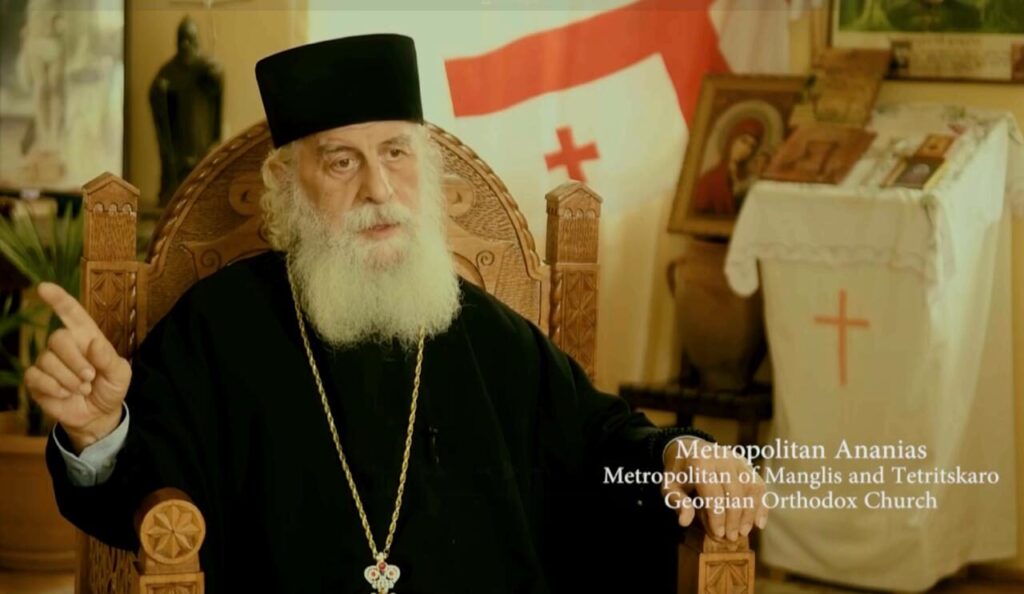
Drawing on historical sources and archival materials, Metropolitan Anania outlined the position that the Church of Caucasian Albania was abolished with the direct involvement of the Armenian Church. In doing so, the film once again brought one of the most sensitive issues in the church history of the Caucasus into the public sphere: the fate of the Albanian Church and the subsequent ownership of its temples, ecclesiastical structures, and spiritual heritage.
Following the film’s presentation, we reached out to Professor Guram Markhulia, a historian at Sukhumi State University, asking him to evaluate the issues raised in the film within a broader South Caucasus context.
According to the professor, the topic of Caucasian Albania is of direct relevance to Georgia as well. Markhulia draws a parallel between the historical disputes over Albanian Christian heritage in Azerbaijan and the long-standing disagreements regarding the origin, confessional affiliation, and current state of Georgian church monuments—both within the territory of Armenia and in Georgia itself.
In his assessment, this is a similar problem: “Over time, the historical attribution and confessional affiliation of monuments change, and interference with their architecture, inscriptions, frescoes, and other elements can alter the perception of their original origins.”
This is precisely why, the historian argues, the fate of Caucasian Albania’s heritage cannot be viewed as an issue concerning Azerbaijan alone. For Georgian society, it holds particular relevance in the context of what is happening to Georgia’s own cultural and religious heritage.
From Caucasian Albania to Georgian Churches
One of the key issues Markhulia highlights is the status of Georgian churches and monasteries in modern-day Armenia, and this issue must be considered alongside the claims made by Armenian religious organizations to church properties within Georgia itself. In January 2015, the diocese of the Armenian Apostolic Church in Georgia submitted a list to the Georgian authorities comprising 442 churches and religious structures that it claims as Armenian.
This list included active, inactive, destroyed, and abandoned churches across various regions of Georgia, including sites under the jurisdiction of the Georgian Orthodox Church. Separate claims were also made regarding Catholic churches. According to the material in question, the ordinariate of the Armenian Catholic Church asserted rights to an additional 23 sites.
For Guram Markhulia, it is fundamentally important to view these contemporary disputes through a historical lens. He connects them to much longer-standing processes of struggle over ecclesiastical jurisdiction and cultural heritage in the South Caucasus.
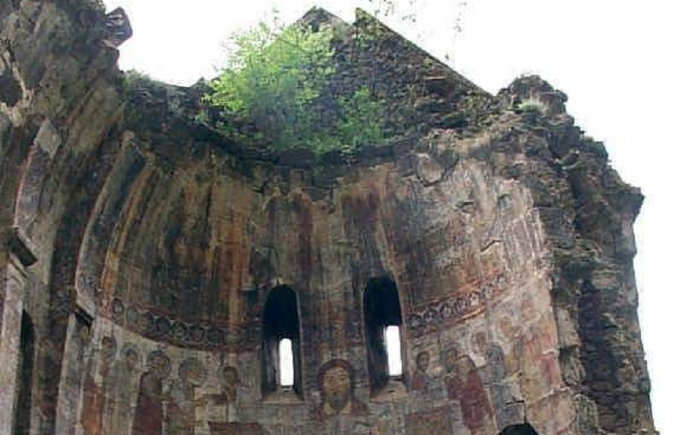
However, the issue is not merely about the formal ownership of a particular church. It is not only about who historically owned a specific temple, but also about what is happening to it today: who is restoring it, whether Georgian inscriptions and frescoes are being preserved, whether its original appearance is being altered, and whether, over time, a Georgian monument is being presented as part of a foreign cultural heritage.
This is where Markhulia sees a parallel with what he believes happened to the Christian heritage of Caucasian Albania: “In the 19th century, the Albanian Catholicosate was finally abolished, and its ecclesiastical structures came under the control of Etchmiadzin. When church jurisdiction changes, followed by the language of worship, then the attribution of the monument, and later its architectural or epigraphic features, it becomes significantly harder for the public to prove the object’s original origins a few generations later.
Therefore, the preservation of monuments is not just a matter of restoring old buildings. It is also a matter of preserving historical memory.”
Guram Markhulia returns to the main question that arises after watching *The Cross of Stolen Churches*: “Why is this issue of direct relevance to Georgia?” According to the historian, events related to the fate of Caucasian Albania’s church heritage cannot be viewed exclusively within the context of Armenian-Azerbaijani historical disputes. They also compel us to pay attention to the fate of Georgian Christian heritage, as Georgia faces similar challenges.
Markhulia highlights two main areas here. The first is the condition, preservation, and historical affiliation of Georgian churches and monasteries within the territory of Armenia. The second involves claims to church properties within Georgia itself. The most extensive example of such claims is the list of 442 churches and religious structures that the diocese of the Armenian Apostolic Church in Georgia considers to be Armenian.
Thus, Markhulia concludes, the issue raised in the film holds very concrete significance for Georgia. It is not merely about events of the distant past, but about the preservation of Georgian churches, their historical appearance, inscriptions, frescoes, and, ultimately, their Georgian cultural and historical identity.